
Tin tức du lịch
Why Phu Tho Tourism Is a Journey into Vietnam’s Past
Apr
Phu Tho Tourism: Nestled in the northern midlands of Vietnam, Phu Tho is more than just a travel destination—it is the soulful cradle of Vietnamese civilization. Known as the homeland of the legendary Hung Kings, the province carries a history that stretches back thousands of years, woven into sacred temples, folk traditions, and living cultural practices. Here, history is not locked in books or museums; it is alive in the songs, the rituals, the food, and the hospitality of its people. A journey through Phu Tho is like walking hand-in-hand with Vietnam’s ancestors, discovering how their legacy continues to shape the spirit of the nation today.
I. The Cradle of Vietnamese Civilization- Phu Tho Tourism
Phu Tho is often celebrated as the legendary homeland of the Hung Kings, the first rulers of Vietnam, making it a land steeped in myths and history. Known as the “ancestral land of the Vietnamese people,” this province holds a special place in the nation’s collective memory as the birthplace of its earliest statehood.
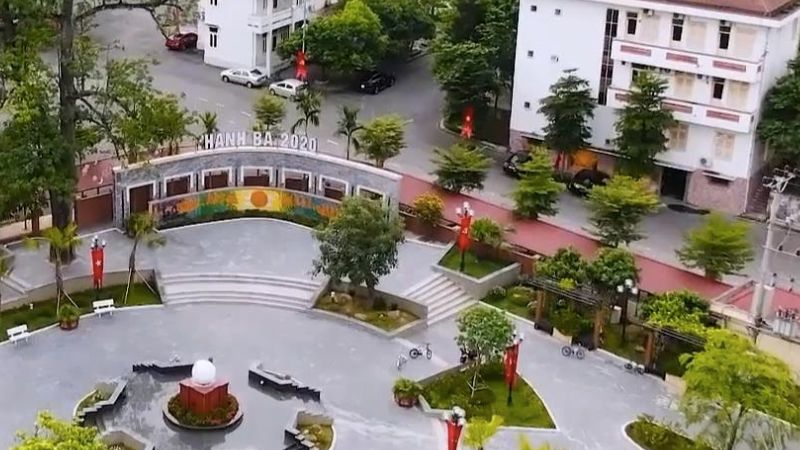
Why Phu Tho Tourism Is a Journey into Vietnam’s Past
Known as the “ancestral land of the Vietnamese people,” this province holds a special place in the nation’s collective memory as the birthplace of its earliest statehood. Here, legends intertwine with history — from the story of Lạc Long Quân and Âu Cơ, whose hundred children became the ancestors of the Vietnamese people, to the tales of early kingdoms that laid the foundation for a unique culture and spirit.
It is here that stories of unity, resilience, and the beginnings of Vietnamese culture took root, creating a powerful connection between the present and a distant past. Walking through Phu Tho feels like retracing the footsteps of the ancestors, where every hill, river, and village whispers tales of origins and identity.
II. Sacred Landmarks of National Heritage- Phu Tho Tourism
At the heart of this heritage lies the Hung Kings Temple Complex, a revered site that has become both a place of worship and a symbol of national pride. Nestled on Nghia Linh Mountain, the complex is where generations of Vietnamese gather to honor their legendary founders. The Hung Kings Festival, held annually, is not only a time of rituals and processions but also a reenactment of cultural myths passed down through centuries. Visitors may hear echoes of heroic tales such as the legend of Sơn Tinh and Thủy Tinh, symbolizing the eternal battle between mountain and river forces, or the story of Lang Liêu, the prince who created bánh chưng and bánh giầy as offerings to his father, the Hung King. These myths are more than folklore — they embody the values of resilience, respect for nature, and gratitude to ancestors, making the experience in Phu Tho both spiritually moving and culturally profound.
The annual Hung Kings Festival, recognized as a national holiday, transforms the province into a vibrant hub of tradition. With solemn rituals, grand processions, and cultural performances, the festival is not only a commemoration of the Hung Kings but also a celebration of Vietnam’s enduring spirit. For many visitors, experiencing this event is a profound reminder of how history and tradition continue to shape the Vietnamese way of life today.
III. Preserving Ancient Arts and Traditions
Beyond temples and legends, Phu Tho is also a cradle of intangible heritage that continues to breathe life into Vietnamese culture. Xoan singing, recognized by UNESCO as an Intangible Cultural Heritage of Humanity, is a folk performance that originated during the Hung Kings era. Traditionally sung in communal houses during spring festivals, these melodies are not just art but also a form of worship to gods and ancestors, carrying echoes of ancient prayers for prosperity and peace. Today, visitors can witness live Xoan performances, often held in intimate village settings, where the rhythms of drums and chants recreate the atmosphere of Vietnam’s earliest cultural gatherings. Together with traditional crafts such as weaving or bamboo artistry, these traditions preserve the memory of a civilization that blossomed thousands of years ago.
IV. Cultural Life in Villages- Phu Tho Tourism
Traveling through Phu Tho’s villages is like stepping into a living museum of rural Vietnam. Artisans continue to practice age-old crafts — pottery, weaving, and bamboo work — each telling its own story of resourcefulness and creativity. Village festivals bring communities together, blending agricultural rituals with performances, games, and offerings to honor the spirits of land and water. In these celebrations, the myths of Sơn Tinh, Thủy Tinh, or Lạc Long Quân are not distant legends but living narratives that villagers weave into dances, songs, and ceremonies. For visitors, joining these events means immersing in an authentic daily life where cultural pride thrives, and ancestral stories remain deeply ingrained in the fabric of community.
V. History Woven with Nature
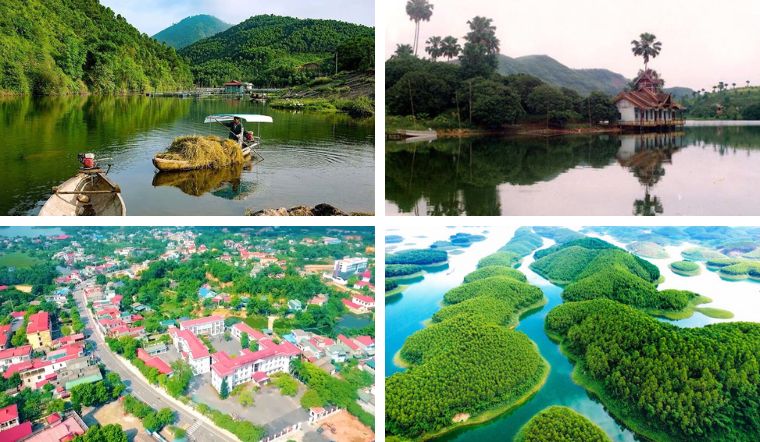
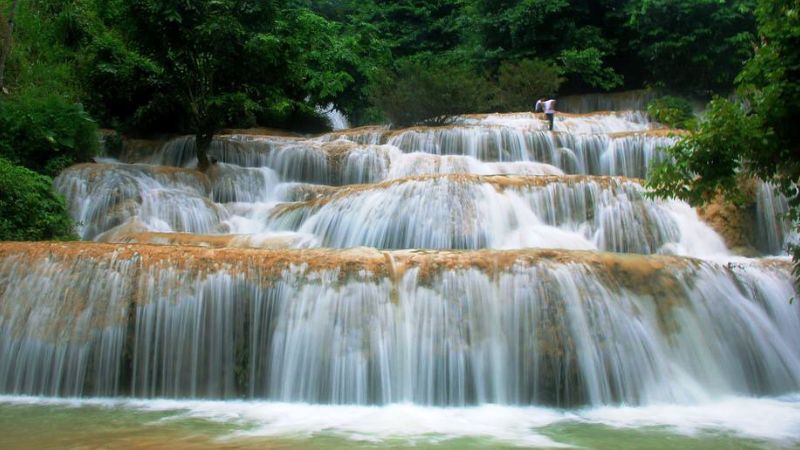
Phu Tho’s natural landscapes are more than scenic backdrops — they are interwoven with history and legend. Rolling hills, tranquil rivers, and fertile rice paddies are tied to the myths of Vietnam’s beginnings, while Nghia Linh Mountain itself is seen as a sacred place where heaven and earth connect. National parks such as Xuan Son not only offer biodiversity and eco-tourism opportunities but also echo the cultural spirit of a land shaped by resilience and reverence for nature. Visitors seeking relaxation can also soak in Thanh Thuy’s mineral hot springs, where the healing waters are believed to carry blessings from the earth. In Phu Tho, history and nature are inseparable, creating a tapestry where every element — whether a forest, a stream, or a ritual — contributes to the story of Vietnam’s origin and endurance.
VI. Culinary Heritage of the Past- Phu Tho Tourism
The cuisine of Phu Tho is a journey back in time, where simple yet flavorful dishes have been preserved and passed down through generations. From the soft and fragrant bánh tai, a specialty of the countryside, to rustic but rich river fish delicacies, every bite reflects the people’s deep connection to their land and rivers. Bustling local markets and humble family-run eateries continue to keep these authentic flavors alive, offering meals that are not only delicious but also steeped in cultural memory. Each dish tells a story—of how ancestors nourished themselves, how they honored the gifts of nature, and how traditions have endured through the centuries.
VII. Living History through Hospitality
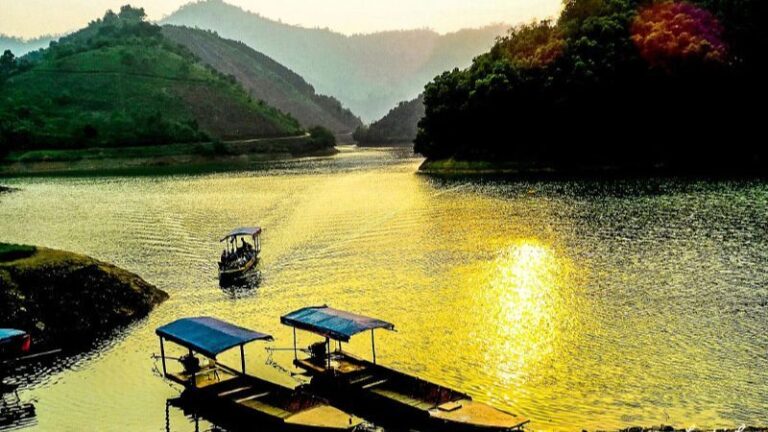
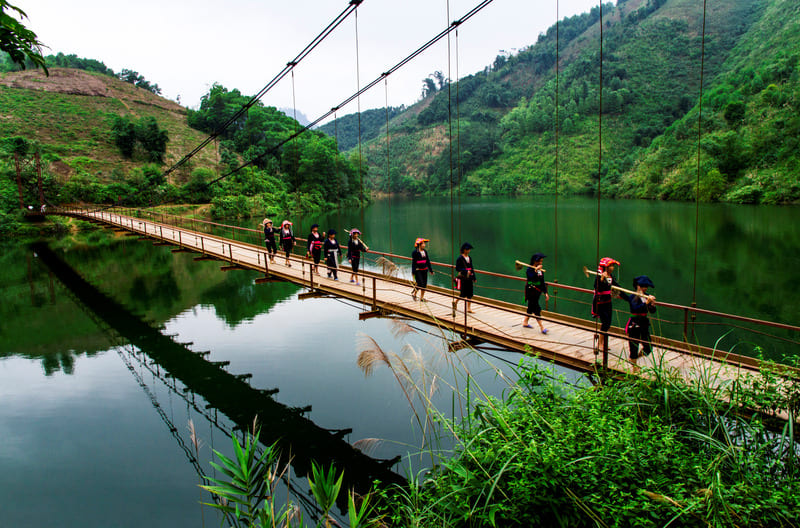
What lingers most after a visit to Phu Tho is not only its sacred temples or vibrant festivals but also the warm hospitality of its people. Staying in local homestays allows travelers to become part of village life—harvesting tea leaves, tending rice fields, or simply listening to ancient legends retold by the fire. These seemingly simple activities open a window into the daily rhythms of the past, where community bonds, harmony with nature, and reverence for ancestors remain strong. Every home, every shared meal becomes a living fragment of history, reminding visitors that heritage is not confined to monuments, but thrives in the lives of ordinary people.
VIII. Seasonal Journeys into Tradition- Phu Tho Tourism
Each season in Phu Tho offers a unique way to reconnect with history and culture. In spring, the land bursts into life with the Hung Kings Festival, drawing throngs of pilgrims back to the sacred birthplace of the nation. Rituals, processions, and communal festivities transform the province into a grand stage of cultural pride. In autumn and winter, when the air is cool and serene, the rolling tea hills, quiet villages, and peaceful landscapes invite travelers to slow down and reflect. Whether amidst the joyous vibrancy of festivals or the tranquil embrace of the countryside, every season in Phu Tho becomes a timeless journey into Vietnam’s past, where history, tradition, and nature merge seamlessly.
Why Phu Tho Tourism Is a Journey into Vietnam’s Past
Conclusion
Phu Tho is not only a place to see but a place to feel the weight of history and the warmth of tradition. From the grandeur of the Hung Kings Temple to the simple yet profound beauty of village life, every moment in Phu Tho connects travelers with Vietnam’s origins and enduring cultural heartbeat. Whether experienced through sacred festivals, UNESCO-recognized folk arts, rustic flavors, or the embrace of local communities, Phu Tho offers an unforgettable journey into the past that remains deeply alive in the present. For those who seek to understand Vietnam’s identity at its roots, Phu Tho is a destination that cannot be missed.
Lira Networking is a specialized travel-booking provider for international visitors in Vietnam, offering a full range of tours across the country — from Hanoi, Hue, Da Nang, Hoi An to Nha Trang, Da Lat, and Phu Quoc. With a strong network of partners and a team of experienced experts, Lira Networking serves as a consultant, designer, and executor of unique and innovative travel experiences for domestic tourism brands.
In addition, we provide comprehensive tour consulting services for international travelers visiting Vietnam, ensuring every journey is well-organized, safe, and rich in authentic local culture. Lira Networking is committed to delivering high-quality trips, cost-optimized packages, and memorable experiences for every guest.
If you need consultation for short-term tours, long-term tours, individual packages, or group travel, please contact us for the fastest support:
📧 Email: liranetworking@outlook.com.vn
📌 Fanpage: Lira Networking